
Every week, European and US businesses lose money — sometimes significant amounts — by placing orders with Chinese suppliers they haven't properly verified. The problems range from straightforward quality failures to outright fraud: advance payments disappearing, goods never shipped, or a completely different product arriving from what was quoted.
Most of these situations are preventable. The following seven checks can be done remotely, take less than a business day in total, and dramatically reduce your risk before you commit a single euro.
Check 1: Verify the Business Licence
Every legitimate Chinese business has a unified social credit code (统一社会信用代码) — an 18-character identifier that appears on their business licence. Ask the supplier for a copy of their business licence and verify it using the National Enterprise Credit Information Publicity System (gsxt.gov.cn).
Look for:
- Whether the business is currently active (not revoked or suspended)
- The registered business scope — does it include manufacturing your product?
- The registered capital and founding date — be cautious of very young companies with low registered capital
- Whether the company name on the licence matches the name on their Alibaba or website profile
A supplier who refuses to share their business licence is a supplier you should not work with. This is a standard request and any legitimate manufacturer will provide it immediately.
Check 2: Confirm They Are a Manufacturer, Not a Trader
Many "factories" on Alibaba are trading companies — middlemen who buy from manufacturers and resell with a margin. There is nothing inherently wrong with this, but you should know what you're dealing with because it affects price, quality control access, and the ability to customise.
Signals that you're talking to a trader rather than a manufacturer:
- They can supply an unusually wide range of unrelated products
- Their minimum order quantities (MOQs) are very low compared to industry norms
- They are hesitant to arrange a factory visit or video call from the production floor
- Their business licence scope says "trading" rather than "manufacturing"
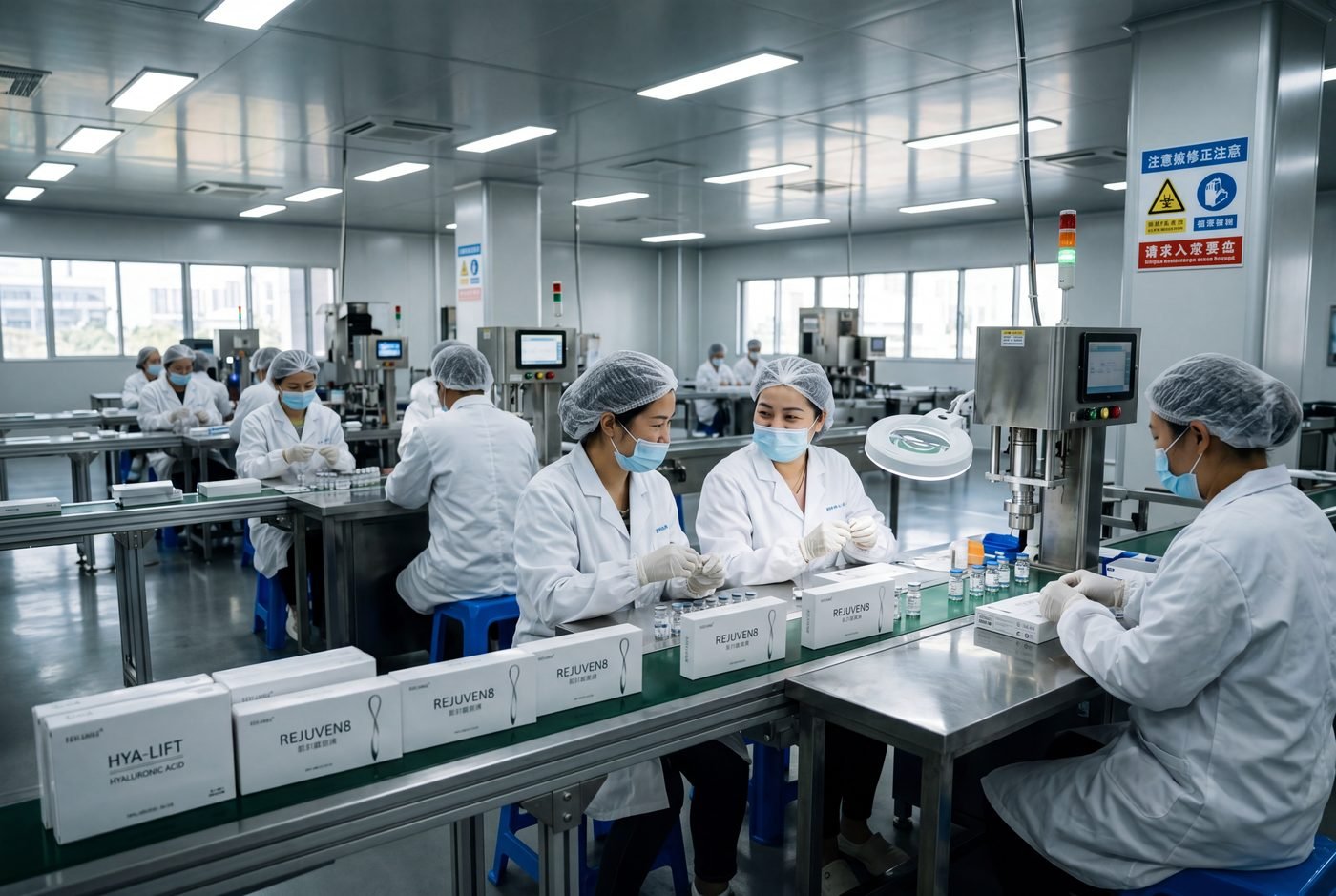
Ask directly: "Can you show me a video tour of your production facility?" A factory will do this happily. A trader will deflect.
Check 3: Request and Verify Certifications
If your product requires certifications — CE, RoHS, ISO 9001, FDA, etc. — ask for copies before placing an order. Then verify them:
- ISO certifications can be checked on the issuing certification body's website
- CE declarations of conformity should reference the specific EU directives and standards the product complies with — a generic CE certificate is meaningless
- Test reports should be from an accredited third-party lab (SGS, Bureau Veritas, TÜV, Intertek) — not the factory's own internal testing
Many suppliers will present certificates that are expired, belong to a different product, or have been fabricated. If the certificate looks unusual, contact the issuing body directly to confirm its authenticity.
Check 4: Look Up Their Export History
Platforms like ImportGenius, Panjiva, and Trademo provide access to shipping records — real cargo manifests showing who has shipped what, to whom, and in what quantities. For a modest fee, you can look up a supplier and see:
- Whether they have genuinely exported to Western buyers (not just domestic sales)
- How consistently they are shipping (active vs. sporadic)
- Who their Western clients are — which may allow you to contact them for references
- Whether the product categories they ship match what they claim to manufacture
A supplier claiming to have exported to Europe for five years with no verifiable shipping history is a significant red flag.
Check 5: Ask for Client References — and Call Them
Any established supplier should be able to provide two or three references from Western buyers. Ask for them. Then actually contact those buyers — not by email, but by phone or video call.
Ask the reference: Have you visited the factory? Was quality consistent across orders? How did they handle quality problems when they arose? Would you order from them again?
References provided by the supplier are naturally biased toward positive relationships. But the conversation often reveals nuances that a written review would not.
Check 6: Order a Sample Before the Production Run
This is non-negotiable for first orders. Pay for a properly produced sample — not a showroom sample that has been hand-finished to a standard the factory cannot achieve in mass production.
A reliable supplier will:
- Produce the sample using the same materials and process as the production run
- Charge a reasonable sample fee (typically cost + courier)
- Be willing to discuss and revise based on your feedback
If a supplier sends you a sample that looks noticeably better than what arrives in your production order, that is a classic bait-and-switch. The sample approval process should be documented and referenced in your purchase order.
Check 7: Conduct a Pre-Shipment Inspection
Before your goods leave China, arrange a pre-shipment inspection (PSI) through a third-party quality control company. SGS, Bureau Veritas, QIMA, and Asia Quality Focus are among the well-established providers. The inspector visits the factory, checks a statistical sample of finished goods against your specifications, and issues a report.
A PSI typically costs €200–350 and takes one day. It gives you:
- An independent assessment of product quality before payment of the balance
- Documentation in case of a dispute
- Leverage — if issues are found, you can require the supplier to correct them before you release the final payment
Most quality failures are caught at this stage, while you still have options. Once goods have shipped, your options narrow considerably.
When to Use a Sourcing Agent
If carrying out all seven of these checks sounds time-consuming, that's because it is — for a first-time importer working in a foreign language and time zone. A professional sourcing agent like Royal Baltica performs all of these steps as standard for every new supplier relationship, and maintains an existing network of pre-vetted manufacturers across China and Southeast Asia.
If you're ready to start sourcing and want expert supplier verification handled for you, send us your requirements.